

Meet the speakers

Thomas Alexander has been head of Division 2, Product and Work Systems, at the Federal Institute for Occupational Safety and Health (BAuA) in Germany since 2019. Prior to this, he worked at the Fraunhofer Society in various positions for 26 years, conducting applied research studies in human factors and ergonomics. Thomas Alexander originally studied safety engineering and obtained his MSc in 1994, and his PhD in 2002. In 2004 and 2005 was a Visiting Scientist at the NASA Ames Research Center in California. Currently, he is also Vice President of the International Ergonomics Association (IEA). His research topics include the impact of innovative technologies such as AI on present and future work systems, and the various effects and implications of climate change on future work systems, especially on occupational safety and health.
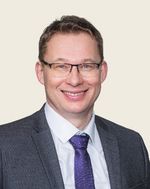
Raimo Antila is Director General at the Finnish Ministry of Social Affairs and Health, Department for Work and Gender Equality, a position he has held since 2017. He is responsible for steering Finland’s occupational safety and health administration. Prior to this role, he served as Director of Field Operations in the Ministry’s Department for Occupational Safety and Health from 2014 to 2017. Raimo Antila also brings extensive private‑sector experience in occupational safety and risk management, including senior roles as Head of EHQS and Risk Manager at Destia Group and as Safety Manager at the Finnish Road Enterprise. At the European level, he serves as a member of the EU Senior Labour Inspectors Committee, the EU Advisory Committee on Occupational Safety and Health, and the Management Board of the EU Agency for Safety and Health at Work (EU‑OSHA). He holds a Master of Science in Engineering.

Carita Aschan is the Director of TTL Services at the Finnish Institute of Occupational Health; from 2015 onwards she has been engaged in various leadership positions at the Institute. She has also served in several trusted roles within various organizations and steering committees. She holds a Ph.D. in Physics (1999) and EMBA (2019).
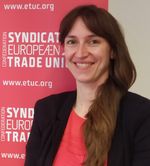
Katrin Behnke is Standardisation Officer at the ETUC, the European Trade Union Confederation. She is part of the ETUC STAND project, which was set up in 2015 to strengthen the participation of trade unions in the standardisation process. Within this project, Katrin Behnke coordinates the ETUC participation in various European and international standardisation committees in the area of cccupational health & safety (OHS) such as ISO/TC 283 ‘Occupational Health & Safety management’. She further coordinates trade union input on the implementation of the Machinery Regulation, with a focus on its underpinning standards. At European level, she participates for the ETUC in the EU Advisory Committee on Occupational Safety and Health – Working Party on Standardisation, EC Machinery Expert Group and the CEN-CLC Coordination Groups on OHS and Machinery standards. Before joining the ETUC, Katrin Behnke worked at ANEC, the European consumer voice in standardisation.
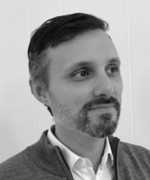
Pierre Belingard is an electrotechnical engineer with over ten years’ experience in product testing and validation across various industrial sectors, including automotive, defence and security. After this professional background, he joined EUROGIP, where he is now responsible, on behalf of the French authorities, for coordinating French Notified Bodies under the Machinery Regulation and the Personal Protective Equipment Regulation. Working closely with the French Ministry of Labour and the French Ministry of Agriculture, he also deals with European regulatory matters. In addition, he participates in standardisation activities in the machinery sector and represents the positions of prevention stakeholders.
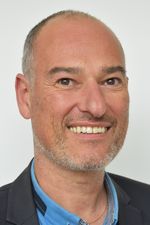
Jean-Christophe Blaise completed his degree in production engineering in 1996, and his PhD in automated production in 2000. At INRS, he is currently Head of a laboratory in charge of machinery and automation issues and of a project related to the safety of flexible and connected production systems. He is also a coordinator within the French network for machine safety prevention and a member of the ISO TC 199 standards committee on safety of machinery.

Clémentine Borgeot is an occupational safety expert at the French National Research and Safety Institute (INRS). Her expertise focuses on the prevention of risks related to driverless trucks and automated storage and retrieval systems. She provides technical support through assistance missions and is involved in standardization committees related to safety of machinery.
Dr. Michael Bretschneider-Hagemes is an OSH expert with many years of experience in the fields of research and politics. His research focused on mobile work and digitalization; at the time he founded the occupational safety session at the leading international conference on human-computer interaction and chaired it for many years.
In later political roles he specialized in AI, machine safety, human-machine interaction, and psychological stress. Today he is a representative of the European Trade Union Confederation (ETUC) in the EU Commission's Machinery expert group within DG Grow and an expert in standardization committees related to occupational health and safety, particulary ergonomics and mental stress and related human-machine interaction. In the EU Commission's Advisory Committee for Safety and Health at Work he is a member of the workers' interest group within the Working Party Standardization. At national level he works for the German trade unions at the Commission for Occupational Health and Safety and Standardisation (KAN).

Ewelina Broda-Kaczmarek is Head of the Process Technology and Pressure Systems Section at the German Social Accident Insurance (DGUV). She also serves as Head of the Plant and Process Safety Section at the German Social Accident Insurance Institution for the Raw Materials and Chemical Industry (BG RCI). With a background in chemical engineering, her expertise focuses on process safety, pressure equipment, and regulatory requirements in industrial environments. She has many years of experience in both the process safety and statutory accident insurance and is actively involved in expert committees and knowledge exchange initiatives.
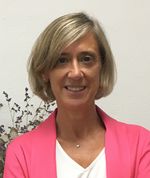
Pilar Cáceres Armendáriz is Director of the National Centre for Personal Protective Equipment (CNMP) at the Spanish National Institute for Safety and Health at Work (INSST). She holds a degree in physics from the University of Seville and a Master’s degree in Leadership and Public Management from the Menéndez Pelayo International University. She has worked at CNMP since 1992, specialising in personal protective equipment (PPE) and working conditions in the agriculture and fishing sectors. CNMP is a notified body under the PPE Directive, and Pilar Cáceres has over 30 years of experience in standardisation, testing, certification, selection, and use of PPE. Her work includes providing technical assistance on PPE to national authorities (Ministry of Industry, labour inspectors, market surveillance and border control authorities) and to private companies. She is a member of the Steering Committee of EUROSHNET.

Jan Erola is a Finnish media professional known for his extensive work as a journalist, editor, publisher, and communications expert. He has worked across major Finnish media and contributed to public discussion as a regular commentator on weekly current affairs programming on Finland’s national public broadcaster, YLE. Jan is the CEO of the communications company Kravat Oy.
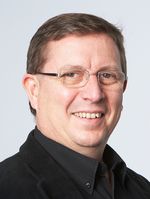
Otto Görnemann is an expert for machine safety, industrial safety standards and regulations at SICK AG in Waldkirch, Germany. He is a member of several technical committees at ISO, IEC, CEN, CENELEC, DIN and AENOR and holds several patents in the area of protective devices. He is a certified trainer and auditor for functional safety and a member of the ISSA Machinery Section. He is the chair of ISO TC 199 and CEN TC 114 for Machine Safety.
Otto Görnemann has been a trainer at universities of applied sciences (Aachen, Bochum, Düsseldorf, Fulda, Heide, etc.) and several German social accident insurance institutions. He has also given lectures for OSH authorities in Brazil (Ministry of Labour, Fundacentro), Israel (IIOSH), Japan (JNIOSH), and OSH institutions in Chile (ACHS), China (SAC), Singapore (SISO), Colombia (CCS) and Portugal (CATIM). He has been appointed as an expert by the European Commission for sectoral dialogues with the Brazilian government.
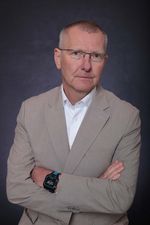
Rafał L. Górny is a full professor of medical sciences. He is currently head of the Laboratory of Biohazards at the Central Institute for Labour Protection – National Research Institute, Warsaw, Poland. He is also head of the Biological Agents Expert Group at the Interdepartmental Commission for Maximum Admissible Concentrations and Intensities for Agents Harmful to Health in the Working Environment, Warsaw, Poland. In the last 30 years of professional work, he has been engaged in numerous studies devoted to health-related aspects of exposure to particulate (including biological) and fibrous aerosols in occupational and non-occupational environments. Since 2002, he has been working as and adviser for the World Health Organization, European Commission, and International Labour Organization in the field of biological agents.
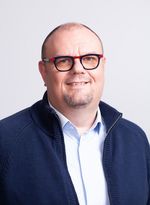
Esa Kivisoja is the Chairman of the Finnish Work Safety Association (Suomen Työturvallisuuden Liitto, STYL ry), which was established in 1973 and whose membership includes all major companies manufacturing, importing and distributing PPE and other safety or well-being equipment in Finland. STYL aims to improve safety at work through different on-site and/or web-based trainings and represents the interest of the trade toward authorities, notified bodies and other relevant organizations. He is also a member of the Board of Directors of the European Safety Federation (ESF), which resperensts the interests of its members towards the European institutions and other relevant stakeholders organizations (notified bodies, market surveillance authorities, standardization, OSH community…). He has held several positions in PPE sales for multinational companies since 1996 and currently works at Ejendals Suomi Oy, a manufacturer of safety shoes and gloves.

Heidi Lahti is a researcher at the Finnish Institute of Occupational Health, currently conducting doctoral research in work and organizational psychology in affiliation with Tampere University. Her research examines algorithmic management and AI use at work from a worker-centered perspective, with a focus on job demands, resources, and employee well-being.
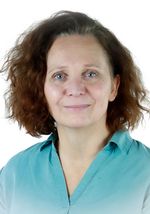
Stéphanie Marsteau is a senior research scientist at INRS, the French Research and Safety Institute for the Prevention of Occupational Accidents and Diseases. Her domains of research deal with respiratory protective devices, adsorption phenomena and the assessment of chemical exposure risks in the workplace. She has been a member of the CEN and ISO Respiratory Protection sector for 17 years.
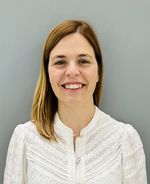
Miriam Martínez Albert is a Spanish researcher and academic specializing in textile engineering. She serves as the Head of the Comfort Department at AITEX, the Textile Industry Research Association, which is a global leader in textile innovation and technology based in Spain. Miriam holds a degree in Chemistry from the University of Alicante and a PhD in Textile Engineering from the Polytechnic University of Valencia. Her research focuses on enhancing thermal performance, particularly in personal cooling systems, and developing standardised testing protocols for these systems. At AITEX, she leads projects aimed at measuring and optimizing thermal comfort in PPE, ensuring the safety and well-being of workers in demanding environments.
Nikolaos Mitsouridis is a legal officer with the unit responsible for health and safety at work at the Directorate-General for Employment, Social Affairs and Inclusion of the European Commission. He worked on the European Commission’s review of the EU’s OSH legislation. Amongst his other tasks, he is the Commission services’ representative at the Working Party ‘Standardisation’ of the Advisory Committee for Safety and Health at Work, whose task it is to assist the Commission in the preparation, implementation and evaluation of activities in the fields of health and safety at work.

Nastazja Potocka-Sionek is a Postdoctoral Researcher in European and Comparative Labour Law at the University of Luxembourg. She holds a PhD degree in law from the European University Institute (EUI) in Florence, an LL.M. degree in German law from the University of Münster, and a master's degree in law from the University of Łódź. Her current research focuses on algorithmic management, AI practices at work, platform work, OSH and well-being at work, and workers' data protection. Her publications feature in leading academic journals, e.g. Common Market Law Review, International Journal of Comparative Labour Law and Industrial Relations. She has also been involved as an expert in several projects commissioned by the EU Commission, the ILO, and national agencies.

Anna Ruhala is notified body manager for personal protective equipment (PPE) at SGS Fimko Oy. In her position she is responsible for the global network of PPE experts working under SGS Fimko notified body status. She has over 15 years of experience with PPE – from testing to certification and research to standardization. Anna Ruhala holds an MSc in physics (2007) from the University of Helsinki specializing in material science. SGS Fimko Oy is part of the global SGS SA group, one of the world’s leading testing, inspection and certification companies.

José Alberto Salcedo is a seasoned health and safety professional with over 19 years of international experience in the infrastructure and construction sectors. Spanning operational to corporate levels, his career includes key tenures at major global companies such as Ferrovial and Acciona. Throughout his career, J. Alberto has acted as a functional lead on numerous innovation projects, successfully managing the digitalization of OHS processes. In his current role at Acciona, he drives the technological transformation of the H&S department, specifically leading the strategic application of Artificial Intelligence and new technologies to enhance health and safety standards.

Annick Starren has been working within EU-OSHA’s Prevention and Research Unit since 2016. Her key responsibilites are coordination of EU-OSHA’s Anticipating Change and Future of Work projects, such as the Foresight on the Circular Economy and a series of Future of Work expert articles. She also manages the priority area of Smart Digital OSH systems as part of the Healthy Workplaces Campaign on Digitalisation and OSH, EU-OSHA’s VESAFE e-guide for work related traffic safety, and serves on the international scientific committee of the Working on Safety Conferences. Prior to her current role, Annick Starren worked for TNO Safe and Healthy Business in the Netherlands. She also gained experience with the Dutch Ministry of Transport and Infrastructure and worked as an IT management consultant. Annick studied Work and Organisational Psychology at both the University of Amsterdam and the University of Tennessee, Knoxville and holds a postdoctoral qualification in Change Management.
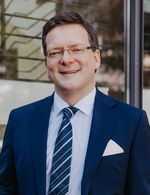
Jonas Stein specializes in the safety and security of machinery. He is head of the Industrial Security Section at the German Social Accident Insurance (DGUV). He also leads the digital manufacturing project group of the ISSA Machine and System Safety Section, as well as the DGUV AK Security Working Group. Within the CENELEC/TC44x/WG02 standardization working group, he contributes to the EN 50742 security standard for machinery and functional safety devices. He is also a member of the Expert Group D of the European Commission, contributing to the new Machinery Regulation guide.

Katja Tähtinen is a Professor of Practice in Sustainable Civil Engineering at Aalto University and Research Director at the Building Information Foundation RTS. Her research focuses on building longevity, reuse, and recyclability, as well as indoor environments. Her work bridges research, policy, and practice, supporting the transition toward circular, healthy, and resource-efficient built environments.

Martin Thomson is Head of Innovation at the Health and Safety Executive (HSE) Science Division, where he develops practical solutions and new products using HSE’s regulatory and scientific expertise. He previously worked in Major Hazards supporting the safe deployment of new energy technologies before moving to HSE's Discovering Safety programme, where he shapes research that explores the risks and opportunities from using data, AI, and emerging technologies to improve OSH performance.

Natalie Wilson is founder & Managing Director of Workwear Solutions International (WSI), a multi-award-winning company dedicated to enabling the uniform industry through innovative technical, design, and sourcing services. Natalie holds a Master’s degree in European Business (Distinction) from the University of the West of England, Bristol. She is also a certified SA 8000 Social & Ethical Auditor. Natalie has become a leading voice in the development of inclusive PPE and workwear standards. Her leadership has driven advancements in making PPE accessible and effective for diverse users across industries. Recent highlights include chairing the British Standards Institution (BSI) committee that developed the world’s first inclusive PPE standard (BS 30417), and serving as the Convenor of CEN/CENELEC JTC/23 Working Group 6 - Inclusivity. Drawing on extensive international expertise, Natalie shares valuable lessons from the UK and European markets on implementing inclusive practices in design and procurement. Her commitment to inclusivity and excellence continues to shape the future of workwear and PPE globally.
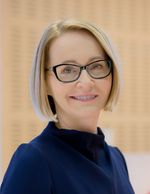
Ewa Zielińska is the President of the Polish Committee for Standardization (PKN), the national standards body of the Republic of Poland. She has extensive experience in international and European standardization cooperation. From 2022 to 2025, she served as Vice-President Policy at CENELEC. In her role as President of PKN, she is responsible for the organization and management of standardization processes in Poland, as well as ensuring their alignment with the activities of the European (CEN, CENELEC, and ETSI) and international standards organization (ISO, IEC). Her role includes strategic coordination, organizational representation, and ensuring alignment of the organization’s objectives with international standardization initiatives.